

When air quality is poor, people may experience adverse health effects—especially older adults, infants, children, those who are pregnant and those with respiratory infections or existing health conditions.
Wildfires increasingly affect air quality. During wildfire season, smoke conditions can change quickly over short distances and can vary considerably hour-by-hour. It's crucial to recognize the dangers of wildfire smoke and adopt protective measures for yourself and loved ones.
What to do in smoky conditions
- Check out local air quality: See local sensors on the PurpleAir map or AQmap.
- Stay informed: Keep an eye on local air quality forecasts and advisories from trustworthy sources like Environment Canada.
- Reduce your smoke exposure: When smoke is present, stay inside and reduce smoke exposure by sealing windows and doors.
- Plan for indoor physical activity when air quality is poor.
- Smoke levels may be lower indoors but will still be present, so stay aware of your symptoms even when you are indoors.
- You can improve indoor air quality in one room by running a HEPA (high efficiency particulate air) filter.
- If you have a heat pump or forced air heating/cooling system in your home, it may help to change the filter and set the fan to run continuously.
- Reduce indoor air pollution sources such as smoking, burning candles or incense and frying foods.
- Consider going to a library, community centre, movie theatre or shopping mall with cooler filtered air to get some relief from smoke.
- If you are travelling in a car with air conditioning, keep the windows up and the ventilation set to recirculate.
- Get health advice: Island Health provides support for heat-related illness and wildfire smoke inhalation. Call the Community Access Line at 250.388.2273.
What we're doing
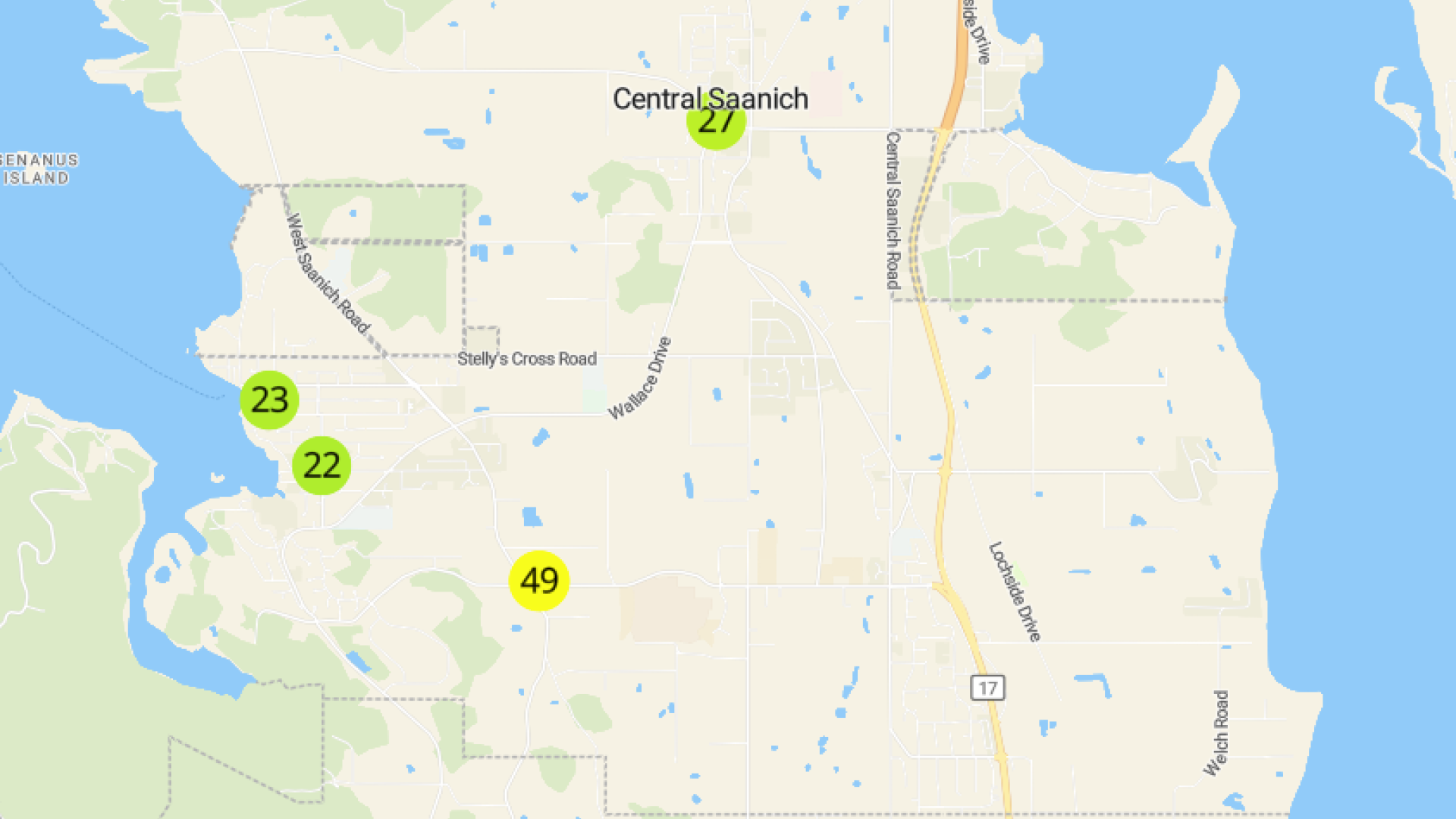
Central Saanich’s Municipal Hall in Saanichton and Fire Station #1 on Keating Cross Road each have a Purple Air sensor installed. They use laser particle counters to monitor fine particulate matter. Data uploads to an online PurpleAir map every 10 minutes, so that you can get local, real-time air quality information.
Did you know? The air contaminant of greatest concern is PM2.5, which is particulate matter less than 2.5 microns in diameter. This contaminant can travel deep into the lungs and become lodged there, in some cases contributing to heart and lung disease and premature death. These particles primarily occur due to outdoor burning, wood-burning appliances and wildfires.
For more information, go to Island Health.